Maintaining hygienic conditions and preventing microbial contamination are essential in pharmaceutical manufacturing, healthcare facilities, and research laboratories. Reliable sterilization equipment helps process compatible instruments, materials, and equipment under controlled conditions. A Rectangular Horizontal Autoclave uses pressurized steam to destroy microorganisms once it reaches the required temperature, pressure, and exposure time.
Power Sterilization Maximum Safety in Ahmedabad
Designed for efficient loading and controlled sterilization, this equipment can support facilities that process large batches of materials. Understanding its safety features, operating principles, and applications helps businesses choose suitable sterilization equipment for their needs.
What Is a Rectangular Horizontal Autoclave
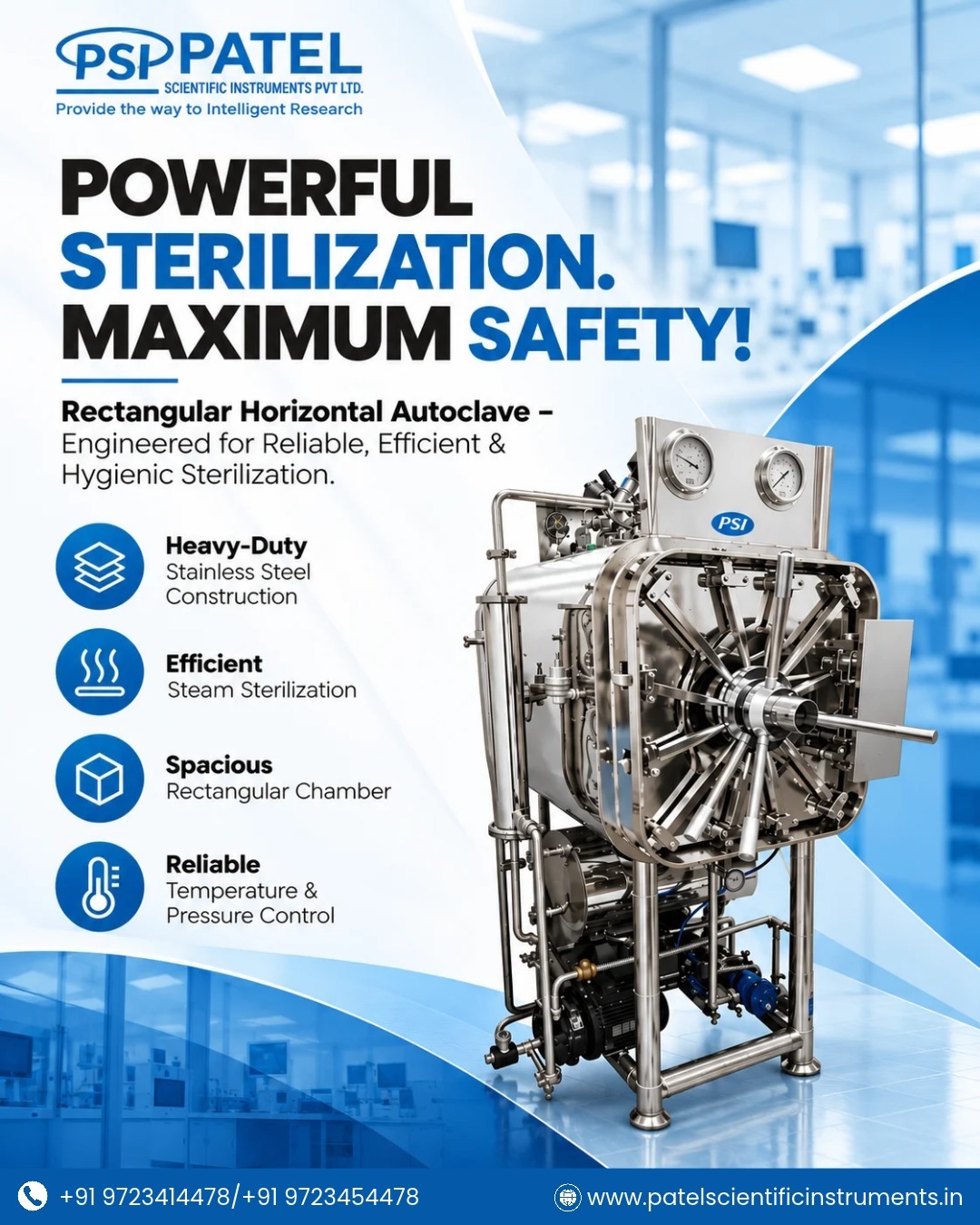
A Rectangular Horizontal Autoclave is a steam sterilization system featuring a horizontally positioned chamber with a rectangular interior. It is designed to accommodate suitable instruments, laboratory supplies, and other compatible materials for sterilization.
The equipment uses saturated steam under pressure to transfer heat effectively to the load. Its performance depends on factors such as chamber design, steam quality, load arrangement, and the selected sterilization cycle.
A properly specified autoclave can support consistent sterilization procedures in pharmaceutical facilities, hospitals, laboratories, and research centers.
How Does a Rectangular Horizontal Autoclave Ensure Maximum Sterilization Safety?
A properly designed Horizontal Steam Sterilizer supports safe, effective operation through several key features.
1. Controlled Steam Sterilization
Pressurized steam exposes compatible materials to moist heat, helping destroy microorganisms, including bacterial spores, when validated process conditions are met. Selecting the correct cycle for the load is essential for effective sterilization.
2. Reliable Temperature and Pressure Monitoring
Temperature and pressure monitoring help operators verify that the equipment is operating within the required parameters. Appropriate sensors, controls, and alarms can identify deviations and support consistent cycle management.
3. Safety Interlocks and Pressure Protection
Depending on the model, an autoclave may include door interlocks, pressure protection devices, and safety alarms. These features help reduce the risk of opening the chamber under unsafe conditions and support safer equipment operation.
4. Durable Stainless Steel Construction
Stainless steel is commonly used in autoclave chambers because of its strength, corrosion resistance, and suitability for appropriate cleaning procedures. Good construction and routine inspection help maintain equipment integrity over time.
5. Consistent and Repeatable Sterilization Cycles
Programmable controls can help operators establish repeatable cycle settings for different approved load types. Monitoring, documentation, and process validation further support quality assurance and sterilization safety.
What Are the Common Applications of a Rectangular Horizontal Autoclave?
A Rectangular Horizontal Autoclave can support sterilization requirements in several industries.
* Pharmaceutical Manufacturing: Sterilizes compatible production tools, equipment, and materials.
* Hospitals and Healthcare Facilities: Sterilizes suitable reusable medical instruments and supplies.
* Research Laboratories: Supports the sterilization of compatible glassware, laboratory tools, and materials.
* Biotechnology Facilities: Helps control microbial contamination in appropriate laboratory and production processes.
* Educational Institutions: Supports sterilization needs in scientific teaching and research laboratories.
* Industrial Laboratories: Process suitable equipment and materials requiring validated steam sterilization.
Select equipment and cycles based on load, material compatibility, and applicable industry requirements.
What Are the Key Features of a Safe Horizontal Autoclave?
When evaluating Pharmaceutical Sterilization Equipment, consider the following features:
* Spacious Rectangular Chamber: Provides practical loading space for compatible materials.
* Temperature and Pressure Controls: Help maintain required operating conditions.
* Door Safety Mechanisms: May prevent opening while the chamber remains pressurized.
* Steam Distribution: Supports effective heat transfer throughout the chamber and load.
* Programmable Controls: Allow suitable sterilization cycles to be configured.
* Monitoring and Records: Help document operating conditions and cycle results, depending on the system.
* Maintenance-Friendly Design: Supports routine inspection, cleaning, and servicing.
Actual features and specifications vary by model. Confirm chamber capacity, operating limits, control functions, and safety provisions with the manufacturer before purchasing.
How to Choose the Right Rectangular Horizontal Autoclave
Selecting the right Industrial Autoclave requires careful consideration of your facility's workload and safety requirements.
Important Factors to Consider
* Chamber Capacity: Choose a size that accommodates your typical batch volume.
* Load Compatibility: Verify that materials and packaging can withstand the selected sterilization cycle.
* Operating Parameters: Check the temperature, pressure, and exposure time your application requires.
* Safety Features: Review door interlocks, pressure protection, alarms, and emergency procedures.
* Control System: Consider cycle programming, monitoring, and data recording capabilities.
* Compliance Requirements: Evaluate the standards, documentation, and validation procedures applicable to your facility.
* Maintenance Needs: Check component access, service requirements, and recommended inspection intervals.
Consulting an experienced Autoclave Manufacturer can help you select equipment that suits your sterilization process and operational requirements.
Why Is Regular Autoclave Maintenance Important?
Routine maintenance helps preserve equipment safety and performance. Important activities may include:
* Inspecting chamber seals, door mechanisms, and safety interlocks.
* Checking temperature and pressure sensors.
* Cleaning the chamber and drainage system.
* Inspecting steam supply and condensate removal components.
* Testing safety devices according to the manufacturer's recommendations.
* Completing calibration, qualification, and validation activities as required.
Maintenance should follow the manufacturer's instructions and the facility's documented procedures. Regular checks help identify potential issues before they affect equipment performance.
Why Choose Patel Scientific Instruments Pvt. Ltd.
Choosing sterilization equipment requires attention to chamber design, operating parameters, safety provisions, and the facility's needs. Patel Scientific Instruments Pvt. Ltd. is the point of contact for businesses looking to enquire about sterilization equipment for laboratory and industrial applications.
Before purchasing, discuss your load requirements, chamber capacity, required sterilization cycles, and safety expectations with the company. Confirm the available model specifications and features to ensure the equipment suits your application.
A Rectangular Horizontal Autoclave supports effective steam sterilization by combining controlled operating conditions with a practical chamber design. Features such as temperature and pressure monitoring, safety interlocks, and programmable cycles support safe, repeatable operation when correctly specified and maintained.
Choosing suitable equipment, following validated procedures, and carrying out routine maintenance are essential for reliable sterilization results.
Contact Patel Scientific Instruments Pvt. Ltd. to discuss your sterilization requirements and enquire about a suitable rectangular horizontal autoclave for your facility.
Frequently Asked Questions (FAQs)
1. What is a rectangular horizontal autoclave used for?
It sterilizes compatible instruments, laboratory supplies, equipment, and other suitable materials using pressurized steam in healthcare, pharmaceutical, and research environments.
2. How does a rectangular horizontal autoclave ensure sterilization safety?
It supports safe operation through temperature and pressure monitoring, controlled sterilization cycles, door interlocks, and pressure-protection features. Effective sterilization also depends on validated cycle parameters and correct loading.
3. What are the main benefits of a horizontal autoclave?
Its benefits may include a spacious chamber, convenient loading, controlled operating conditions, and the ability to process larger batches, depending on the model and application.
Keywords